Freestyle Canada chief executive officer Peter Judge faced a choice between his organization running a deficit of over half a million dollars or hosting no World Cups in Canada next year.
The federal government's announcement of a $755-million injection into sport over the next five years, and dropping to $118 million after that, had Judge and other Canadian sport leaders exhaling Tuesday.
"I was literally doing budget work today," Judge said. "My sense is my board had reached their tolerance limit for deficit spending.
"This is the most, I would say, generational investment and vote of confidence in sport in almost two decades."
The sport funding boost was a piece of the government's spring economic update.
The money's stated purpose was to bring more international sport events to Canada, better support the country's athletes competing on the world stage and remove barriers to get more Canadians involved in sport.
"Canadians understand the power of sport — how it pushes us to do better and brings us together in our communities," said Finance Minister Francois-Philippe Champagne in Ottawa.
"We saw this … during the Olympic and Paralympic Winter Games, and we see it every day on our rinks, in our sports centres, and in our school yards.
"A Canada for all must also be a Canada where sport is accessible for everyone."
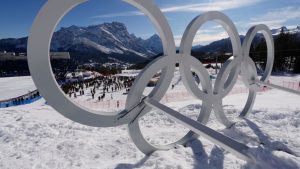
Two elements preceding Tuesday's announcement were Canada's performance in February's Milan Cortina Winter Games and the Future of Sport in Canada Commission's final report in March.
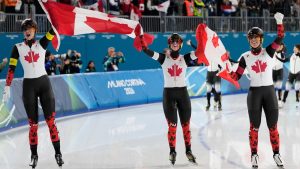
Canada fell out of the top five countries in the total medal count at a Winter Olympics for the first time since 1994 at the Milan Cortina Games.
The country's gold and total medal numbers also dropped in the Paralympic Games in Italy compared to four years earlier in Beijing.
The Canadian Olympic and Paralympic committees used the Games stage to continue their lobby on behalf of national sport organizations for an increase in core funding, which hadn't increased in more than 20 years.
They'd asked in two successive budgets for a raise with the most recent request $144 million more in 2025.
Tuesday's announcement included $660 million more over five years and $110 million after that to national sport organizations to invest in their athletes and grow participation in their sports.
Another $45 million over five years and $8 million thereafter goes to athletes to train and compete, and have access to more mental health support.
"We feel heard. Canadian athletes feel heard," Canadian Olympic Committee chief executive officer David Shoemaker said. "It's a generational investment in Canadian sport.
"It feels like a confluence of factors and voices came together. I have to say at the top of the list, it has to be Canadian athletes who talked about the challenge of pursuing Olympic and Paralympic dreams on a shoestring."
The Future of Sport in Canada Commission's final report issued March 24 stated "there is no doubt the sport system is facing a funding crisis. The current federal funding has not kept pace with inflation of the system's demands."
The commission's mandate was to provide recommendations to make sport safer, after a wave of complaints of abuse and maltreatment in sport, and to make the sport system better.
Lise Maisonneuve, a former chief justice of the Ontario court of justice, headed the commission and said "chronic underfunding makes sport less safe."
Philippe Marquis, who is a former Olympic moguls skier now coaching Freestyle Canada's young talent, believes the commission's report, combined with Canada's medal count at the Milan Cortina Games fuelled Tuesday's announcement.
"It was easy to see that other nations were better prepared and better funded," said Marquis, who also chairs the COC athletes' commission.
"We could really see over the last quad or even like maybe two quads of Olympics where the financial burden on the athlete's shoulders was getting really heavy to carry and so was it in terms of sport organizations
"This kind of funding has the potential to be transformational."
The government also earmarked $50 million over the next five years to hosting international events. Canada is a co-host of this year's FIFA World Cup with Toronto and Vancouver hosting a combined 13 games.
Prime Minister Mark Carney hinted at an infusion of cash into the sports system March 14 when speaking with Canadian skiers competing in Norway.
"Exactly what the Prime Minister said, is that we need to revamp the Canadian sport system from playground to podium," Secretary of Sport Adam van Koeverden said Tuesday in Ottawa just before the announcement.
"That is the required investment for our ecosystem from little kids to want to take swimming lessons and their parents want to see them physically active, to our top athletes. We've got to invest in that ecosystem if we want to see it healthy and vibrant."
The funding was also to address barriers to sport participation. Both the commission's report and sport leaders lamented sport was becoming increasingly "pay to play" with only the wealthy able to participate and advance to higher levels.
"It's over the period of five years so it's not that one-and-done project funding that has been really a challenge for the system," Canadian Paralympic Committee chief executive officer Karen O'Neill said.
"And then to have it pointed out that a large part of that funding is to be able to look at supporting all Canadians to experience the benefit of sport at every stage, with a particular nod to women in sport, Indigenous and disability sport, para and Paralympic sport, I couldn't be more pleased."
O'Neill said the CPC seeks to invest in coaching expertise of para sport athletes, as well as tailoring and designing sport for disabled youth instead of trying to modify able-bodied programs to accommodate them.